
Protoplast viability and uptake analysis for agrochemicals and biostimulants
We specialise in measuring whether an active, biostimulant or elicitor actually enters living plant cells, with viability controlled in the same preparation.
The plant cell without the wall
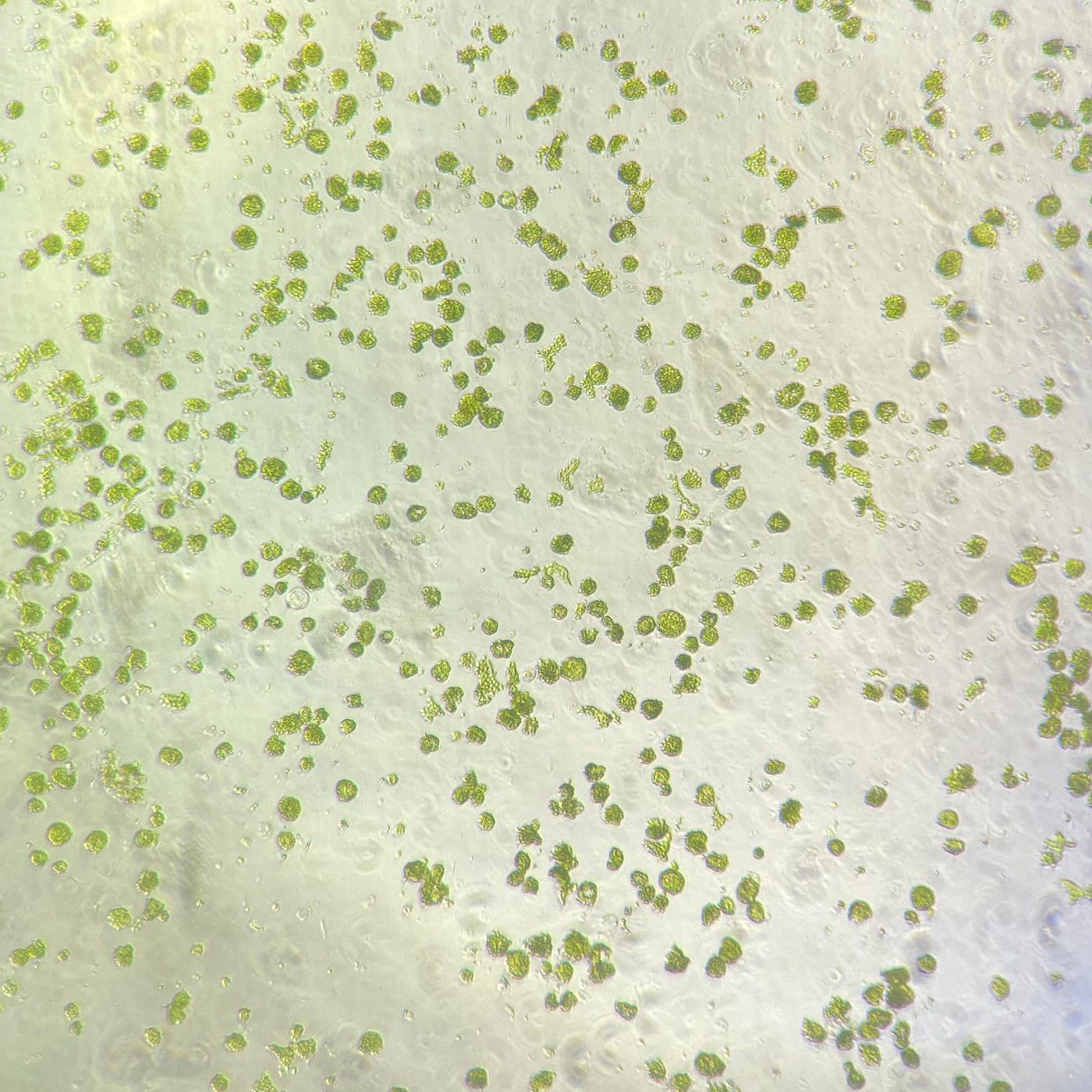
A protoplast is a plant cell with its cell wall enzymatically removed, leaving the plasma membrane exposed. It is the cleanest system in which to ask the question every formulation eventually depends on: does the compound cross the membrane and accumulate inside the cell, and at what rate?
We routinely prepare protoplasts from Arabidopsis thaliana Col-0, the reference plant, and can set up crop species on request. Each preparation is checked for yield and viability before any compound is applied, so uptake is only ever read from living cells.
- Viability first. Every batch is scored before exposure, and again after, so phytotoxicity and membrane damage are flagged rather than mistaken for uptake.
- Real-time uptake. The DrugUptech fluorescent reporter follows the compound leaving the medium as cells take it up, in a sealed 96-well plate.
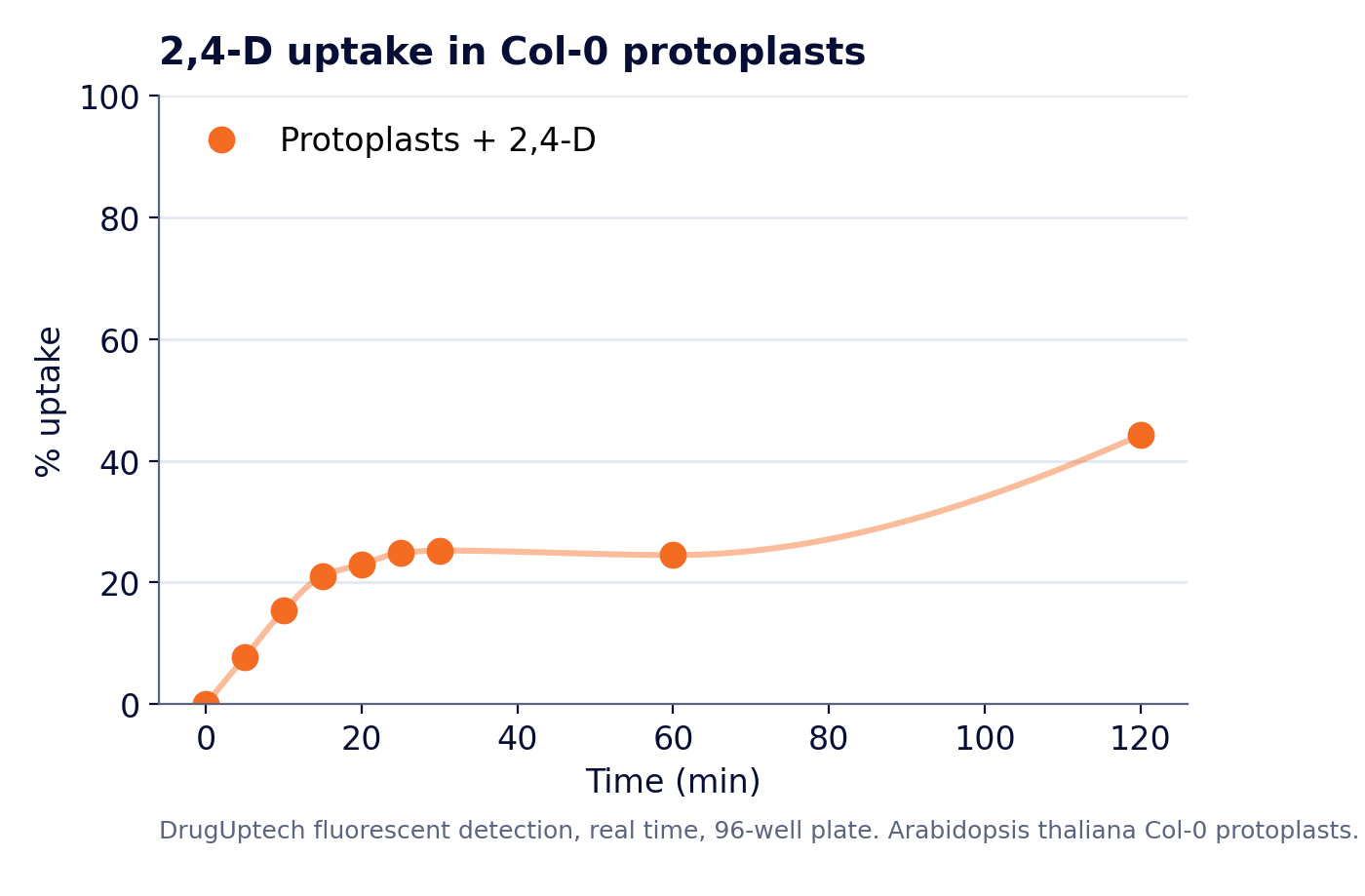
2,4-D uptake followed in real time
Uptake of the synthetic auxin herbicide 2,4-D by Arabidopsis Col-0 protoplasts, measured with the DrugUptech reporter in a 96-well plate.
Uptake expressed as the fraction of applied compound removed from the medium.
Readouts for plant programmes
Protoplast viability
Viability of each preparation before and after exposure, giving a phytotoxicity flag alongside every uptake value.
Uptake and kinetics
Percentage uptake and rate for each compound, benchmarked against reference actives run on the same plate.
Leaf tissue uptake
Foliar assays over hours in leaf discs from any plant species, for formulation, adjuvant and dose questions on intact tissue.
Non drug-like chemistry
The reporter is tuned to the physicochemical range of pesticides, foliar fertilisers and biostimulants, not only pharmaceuticals.
Questions we answer for agrochemical and biostimulant teams
- Chemotype ranking. Which candidates in a series actually enter the plant cell, and how fast.
- Formulation and adjuvant choice. The same active across surfactants, solvents and co-formulants, compared on uptake and on cell viability.
- Dose optimisation. The lowest concentration that saturates uptake, before field trials.
- Biostimulants and elicitors. Whether signalling molecules such as methyl jasmonate and phytohormones reach the cell, including in foliar format.
- Safety and residue questions. Human cell absorption in Caco-2 on the same platform.
From protoplast to crop
Our validation path runs protoplasts, then crop cell lines, then leaf-disc and root tissue. Protoplasts and leaf discs from any plant species are available now; crop cell lines are set up per project with plant material from the species you care about.
Foliar proof of concept
In sealed 96-well plates with spinach leaf discs, methyl jasmonate was depleted from solution over 18 hours while amino-acid comparators and buffer controls were not. The same measurement transfers from protoplasts to intact tissue.
How a plant project runs
Scope
Compounds, species, formulation variables and the decision you need to make.
Prepare and check
Protoplasts isolated, yield and viability scored, detection mode confirmed per compound.
Measure
Real-time uptake with the fluorescent reporter, viability re-scored after exposure.
Report
Uptake, kinetics and viability per compound and formulation, benchmarked, with raw data.
Have actives or biostimulants to test in plant cells?
Tell us the compounds, the species and the formulation variables. We will propose a protoplast panel and, where useful, a leaf-tissue follow-up.